We don't just "add AI"
Every engagement follows a structured methodology: classify the process, model the workflow, apply intelligence, validate with evidence. No black boxes, no magic prompts.
Process Classification (PCF)
We start by classifying your business processes using a 5-level taxonomy inspired by APQC and extended for AI agents. Every process gets a unique address — from domain down to individual step. This creates the map before we build anything.
BPMN 2.0 Process Modelling
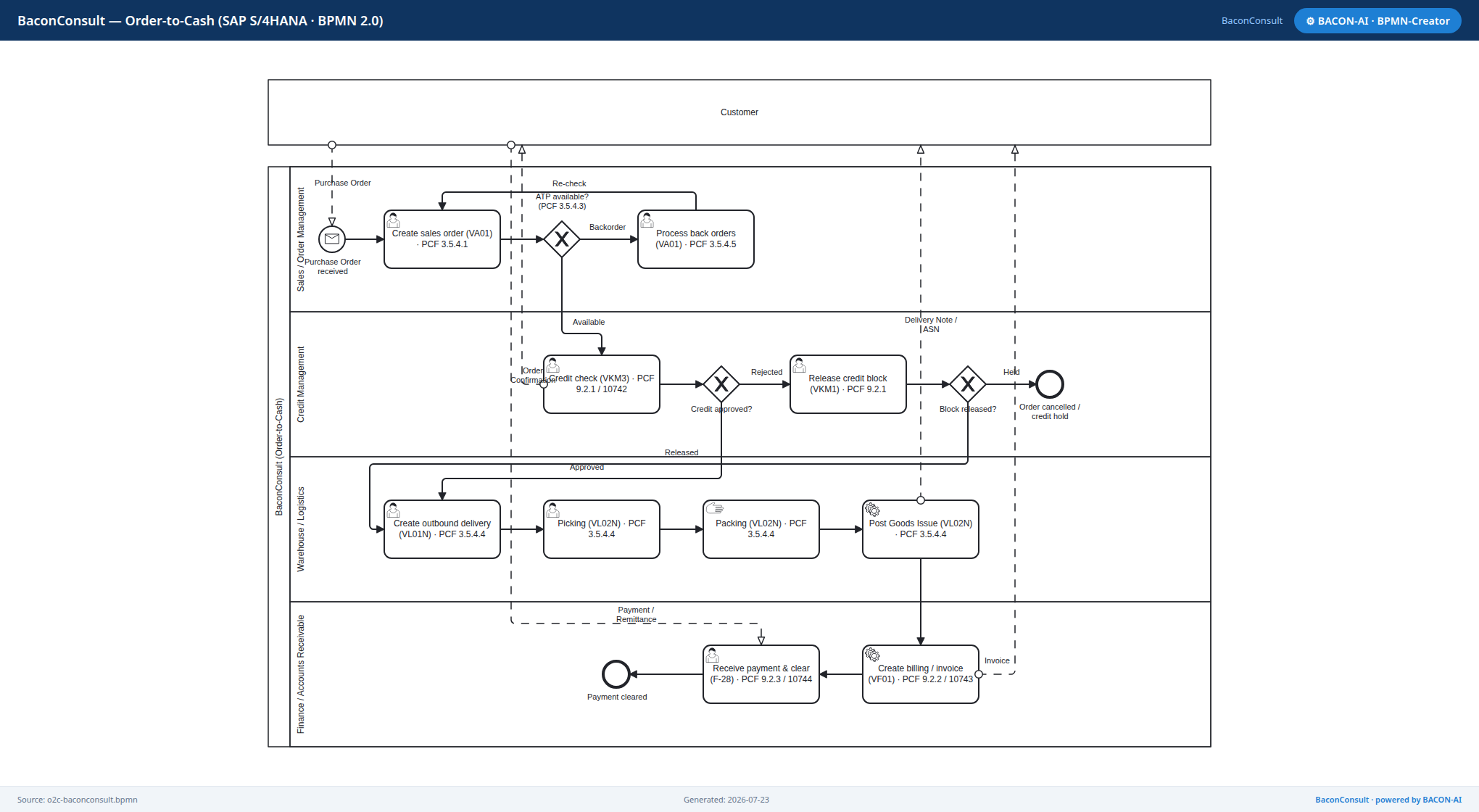
Each classified process gets a visual BPMN 2.0 swimlane diagram. Roles, handoffs, decision points, and failure modes are explicit — not buried in someone's head. The diagram becomes the executable specification.
 powered by BACON-AI
The BACON-AI Engine
Our workflow orchestration platform runs the classified, modelled processes with AI agents. Self-annealing governance means workflows learn from execution — successful variants get promoted, failed ones get flagged. Quality gates (TUT → FUT → SIT → UAT) ensure nothing ships untested.
The same rigour, applied everywhere
We built this methodology for enterprise SAP programme delivery — where a missed process means a missed go-live. We've proven it across global rollouts, Cloud ALM migrations, and agentic test factories. Now we apply the same structured approach to converting websites into AI-ready services.
Discuss your project